

Stick-slip (commonly called “crawling”) refers to discontinuous movement of hydraulic cylinders during low-speed, light-load operation, characterized by irregular speed fluctuations, hesitation, or jerky motion. This phenomenon primarily stems from the following four causes:
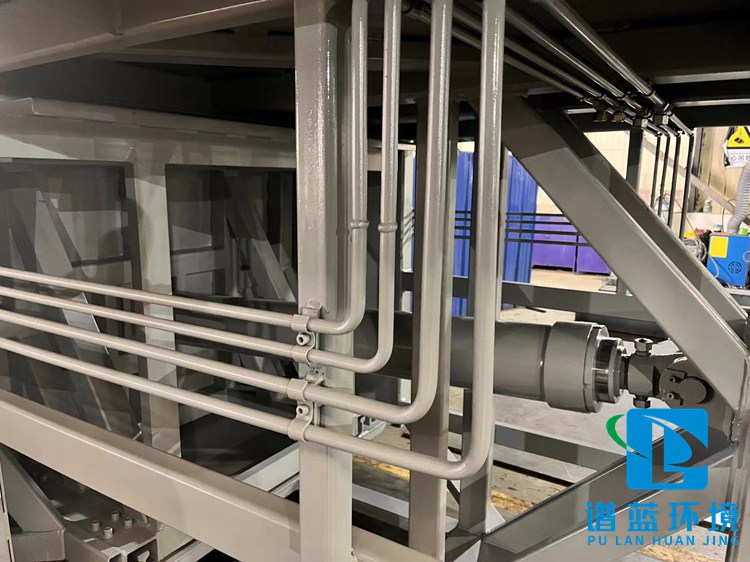

- Air Entrainment in the System:
The presence of compressible air reduces volumetric efficiency and prevents the cylinder from delivering consistent, linear force transmission. - Excessive or Unstable Static Friction:
High or erratic static friction, often caused by particle contamination (e.g., sand grit) within the piston/rod assembly, leads to intermittent sticking and jerking. - Improper Hydraulic Fluid Viscosity:
Fluid viscosity outside the optimal range (either too high or too low) impairs energy transfer efficiency, resulting in stick-slip motion. - Poor Throttling Circuit Design:
Excessive or improperly designed throttling creates high backpressure, disrupting smooth fluid flow and impeding consistent energy transfer to the cylinder.